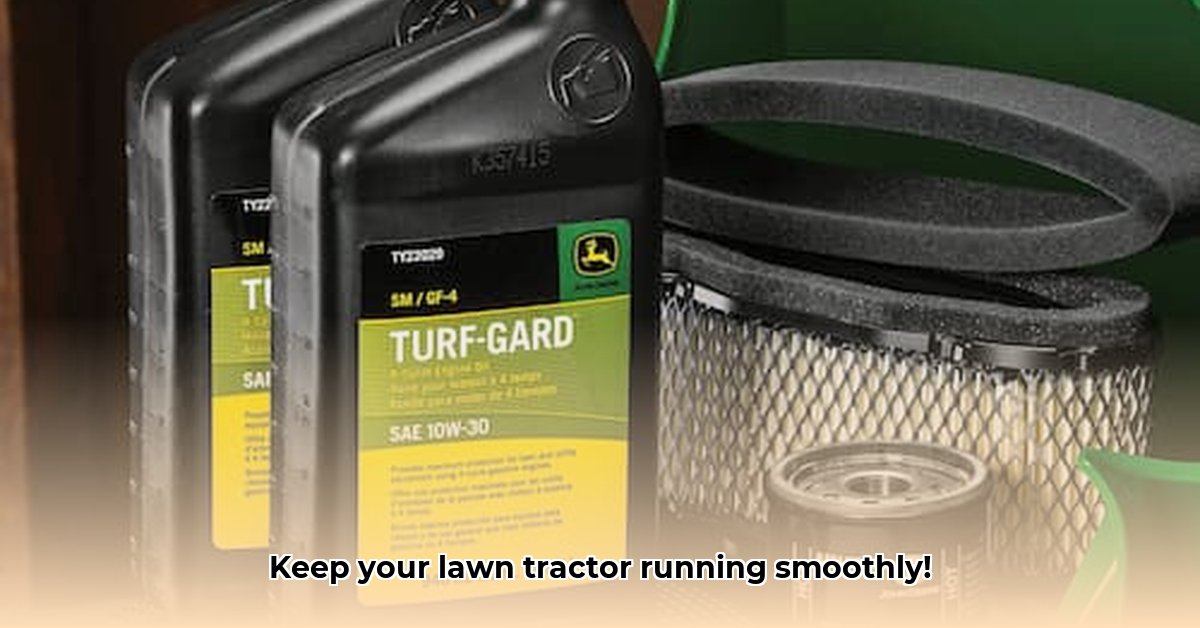
Maintaining your lawn tractor's engine is crucial for its longevity and performance. One of the most important aspects is proper oil maintenance, encompassing selection and regular changes. This comprehensive guide provides clear instructions and crucial information to help you keep your lawn tractor running smoothly for years to come. For more detailed instructions, check out this helpful oil change guide.
Understanding Your Engine's Oil Needs: Two-Stroke vs. Four-Stroke
Before selecting oil, identify your engine type. Most lawn tractors use four-stroke engines, requiring separate oil and fuel. The oil is added directly to the engine's oil reservoir (much like a car). However, some older or smaller models may have two-stroke engines, which necessitate mixing oil directly into the gasoline. This ratio is critical and should be found in your owner's manual; using an incorrect ratio can damage the engine. Always prioritize your owner's manual for specific instructions concerning your model.
Choosing the Right Lawn Tractor Engine Oil: Deciphering the Numbers
Selecting the correct oil can seem confusing due to various viscosity grades (e.g., SAE 30, 10W-30, 5W-30). The numbers represent the oil's thickness (viscosity), affecting its flow at different temperatures. Lower numbers indicate thinner oil at lower temperatures, crucial for easier cold-weather starts. The "W" denotes "winter." A single number (SAE 30) represents a single-grade oil; the numbers before and after the "W" in multi-grade oils indicate their performance at low and high temperatures, respectively.
Older four-stroke engines often use SAE 30 in warmer climates. Newer models usually prefer multi-grade oils like 10W-30 or 5W-30 for their adaptability to wider temperature ranges. Synthetic oils, while more expensive, offer superior performance and longevity, demonstrating improved resistance to high temperatures and superior cleaning abilities.
Crucially: Always consult your owner's manual for your model's recommended oil type and viscosity. Many manufacturers offer online "Oil Finder" tools to assist with this selection based on engine specifics and operating conditions. Never use automotive oil in your lawn tractor; their additives can harm engine components.
Checking Your Lawn Tractor's Oil Level: A Quick Checkup
Regularly checking your oil level is vital for preventing engine damage. It takes only a few minutes, but the preventative maintenance pays off in the long run.
- Safety First: Allow the engine to cool completely before starting. Hot oil poses a burn risk.
- Locate the Dipstick: The dipstick (often marked with an oil can symbol) is normally located on the engine.
- Wipe it Clean: Wipe the dipstick with a clean cloth to ensure an accurate reading.
- Check the Level: Reinsert the dipstick fully, then remove and check the oil level against the minimum and maximum markings.
- Top Off (If Necessary): Add the recommended oil type (from your manual) if the level is low; avoid overfilling.
Changing Your Lawn Tractor's Oil: A Step-by-Step Guide
Regular oil changes are essential for engine health. Always consult your owner's manual for precise instructions and quantities.
- Warm-Up: Run the engine for a few minutes to slightly warm the oil for easier flow.
- Gather Supplies: You'll need fresh oil (correct type and amount), a drain pan, a wrench (for the drain plug), and possibly a new oil filter (check your manual).
- Drain the Old Oil: Position the drain pan under the drain plug (located at the engine's bottom). Carefully loosen and remove the plug and let the oil drain (approximately 10-15 minutes).
- Replace the Drain Plug: Once the oil stops dripping, secure the drain plug—avoid overtightening.
- Change the Oil Filter (If Applicable): If your model has an oil filter, replace it with a new one, ensuring a tight seal.
- Add New Oil: Add the correct amount of new oil specified in your owner's manual, using a funnel for easier pouring.
- Check the Level: Verify the oil level using the dipstick; add more if needed, but avoid overfilling.
How Often Should You Change Your Lawn Tractor Oil?
Oil change frequency depends on usage and manufacturer recommendations. Many manufacturers suggest changes every 50 hours of use or annually for walk-behinds, and every 100 hours or annually for riding mowers (whichever comes first). Heavy use may require more frequent changes. Your owner's manual provides the most accurate schedule for your specific model. This is critical to the long life of your engine.
Troubleshooting: Addressing Potential Oil Problems
If you notice oil leaks, excessive oil consumption, or unusual engine sounds, seek professional help. These problems could indicate more serious underlying issues and attempting DIY repairs without expertise could cause further damage.
Synthetic vs. Conventional Lawn Tractor Oil: A Comparison
The choice between synthetic and conventional oil often depends on budget and desired performance:
| Feature | Synthetic | Conventional |
|---|---|---|
| Performance | Superior in various conditions | Good in typical conditions |
| Longevity | Longer engine and oil lifespan | Shorter lifespan; more frequent changes |
| Cost | More expensive | Less expensive |
| Environmental Impact | Higher environmental impact during production | Usually lower environmental impact during production |
Key Takeaways: Maintaining Your Lawn Tractor Engine
- Prioritize your Owner's Manual: It's your most valuable resource for oil type, quantity, and change intervals. Ignoring this advice can damage your machine.
- Engine Type Matters: Two-stroke and four-stroke engines have vastly different oil requirements.
- Regular Oil Changes are Essential: They're vital for engine health and longevity. Think of it as a regular health check-up for your lawn tractor.
- Professional Help: Don't hesitate to consult a mechanic for persistent problems beyond basic oil maintenance.
Regular oil maintenance is fundamental to maximizing your lawn tractor's lifespan and performance. By following the guidance provided in this guide and consistently checking and changing your oil, you'll ensure many years of trouble-free mowing.